My contact with the Maltese started on the occasion of the first personal pet, which was followed by many others.
The Magic White Crystals - Εκτροφείο Maltese
Ελλάδα, Αττική, Αχαρναί, 136 75, +30 690 715 0649
My contact with the Maltese started on the occasion of the first personal pet, which was followed by many others.
General Information
We do not know for sure if the ancient Greek 'Melitaio kenidio' is directly related to today's Maltese. According to the accepted version, the name of the tribe comes from the Semitic word 'malat' (meaning refuge or port) from which many Mediterranean coastal cities have taken their name, such as the Sicilian Melita (colony of Ionians from Miletus). Central Asia), the islands of Meleda (in the Adriatic) and Malta. The ancestors of the breed, which is a rather small type of spaniel rather than terrier, are mentioned by Aristotle (384-322 BC) and were popular companions in Rome, as Strabo mentions (1st century AD). Useful in the hunt for mice, they accompanied the partners of the golden age of Athens, as well as the ladies in the paintings of the Renaissance.
Lively, expressive, tender, very gentle and intelligent dog, the Maltese is full of life and cheerful mood, as well as satisfied in the arms of his family.
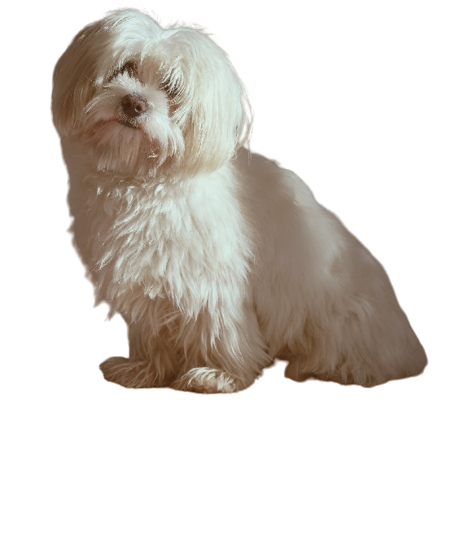
The most brilliant feature of the breed is its rich, silky and shiny hair that covers the body of the Maltese like a white veil. Keeping the hair in excellent condition requires daily, specialized care, while animals that are not going to be presented at morphology exhibitions can be sheared. The dog must also get used to the collar and the leash from a young age, so that it does not become unruly. Frequent bathing with special shampoo is necessary and of course the Maltese must live in the house.
Although it enjoys excellent health and longevity, there are some peculiarities that need attention. Knee padding is quite common in Maltese and we should never lift the dog suddenly from its hind legs or let it jump from above. Fainting due to low blood sugar may occur during teething change. The eyes often tear excessively and stain the hair, a sign that the tear glands need to be occluded by a veterinarian. Teeth should be brushed frequently and nails trimmed weekly.
Clean, endearing, kind and kind Maltese can live in apartments and the life of the city suits him, as long as he has opportunities for practice and social life. Children should learn to treat him with caution, because a petite dog of this size does not withstand abuse. His family should have time to dedicate to the care and upbringing of Maltese, who longs for human companionship and does not thrive in isolation.
The rich white cloak 'camouflages' a squared, compact dog with a proud neck and tail that falls gracefully on the back. Its back is flat and should remain firm when the Maltese moves in its characteristic, airy, fast and elegant way. The coat is single (without a submachine) and falls smoothly on the ribs, touching the ground. The Maltese's head has a moderate 'stop' and a rounded skull, with low, fallen ears covered in heavy hair. The muzzle has a moderate length and is not pointed. The nose is black, as is the pigment of the lips and eyelids, and the eyes are very dark in color and shiny. Its 'sunlike' Mediterranean nature, which is kind-hearted and polite without missing the sparkle, is the most adorable feature of the beautiful Maltese dog.
It should not be left alone for long periods of time, nor be subjected to rough handling and cruel behavior. His tender heart longs for the love and affection he earnestly reciprocates in the multiple. A frothy, neglected Maltese is miserable. He cannot live outside the home and his education must use encouragement, patience, reward and play. Positive motivation and pleasant experiences attribute with distinctions to competitive obedience, as long as the doctrine is done correctly and takes advantage of his devotion and disposition to please. Extroverted as well as dedicated, the Maltese needs both the socialization and the warmth of the embrace of his relatives...
| Cookie | Duration | Description |
|---|---|---|
| cookielawinfo-checkbox-analytics | 11 months | This cookie is set by GDPR Cookie Consent plugin. The cookie is used to store the user consent for the cookies in the category "Analytics". |
| cookielawinfo-checkbox-functional | 11 months | The cookie is set by GDPR cookie consent to record the user consent for the cookies in the category "Functional". |
| cookielawinfo-checkbox-necessary | 11 months | This cookie is set by GDPR Cookie Consent plugin. The cookies is used to store the user consent for the cookies in the category "Necessary". |
| cookielawinfo-checkbox-others | 11 months | This cookie is set by GDPR Cookie Consent plugin. The cookie is used to store the user consent for the cookies in the category "Other. |
| cookielawinfo-checkbox-performance | 11 months | This cookie is set by GDPR Cookie Consent plugin. The cookie is used to store the user consent for the cookies in the category "Performance". |
| viewed_cookie_policy | 11 months | The cookie is set by the GDPR Cookie Consent plugin and is used to store whether or not user has consented to the use of cookies. It does not store any personal data. |


